If you have been hearing more about racket sports lately, especially in Cyprus, it’s not just you. Each sport offers something unique, whether that is a social vibe, a physical challenge or a game that is easy to pick up. But with three sports that look similar on the surface, how do you know which one is right for you? At La Casa De Padel, of course we are partial to padel, but we also appreciate that choosing the right sport is personal. So we have put together this breakdown of Tennis vs Padel vs Pickleball; covering court size, equipment and rules to help you figure out what appeals to you most.
What Are These Three Sports, Exactly?
Tennis is the classic racket sport. It’s played on a rectangular court with a net in the middle and is one of the most recognized and widely played sports in the world. It can be played as singles or doubles and is governed by the International Tennis Federation.
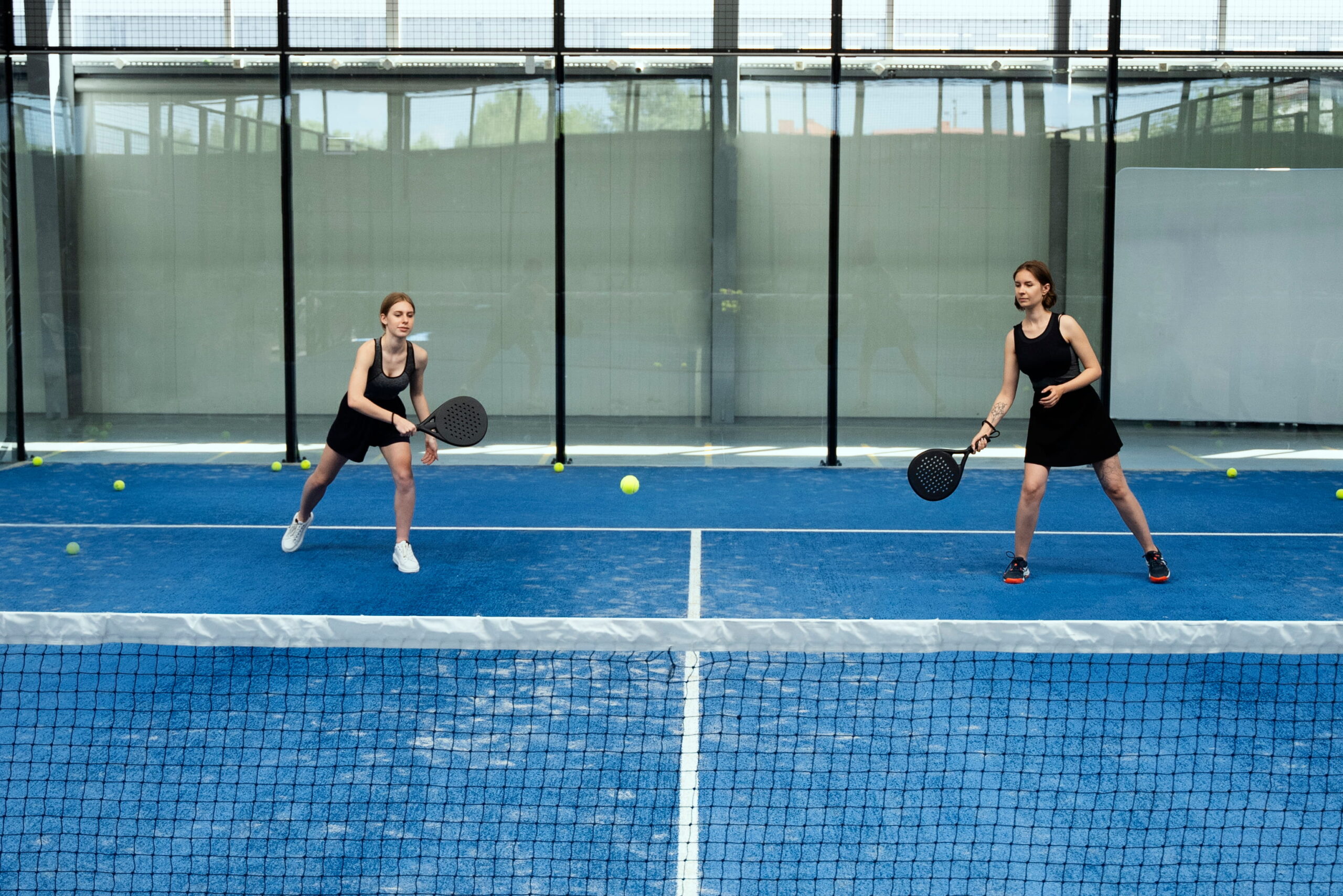
Padel is a hybrid racket sport that combines elements of tennis and squash. It’s played in doubles on an enclosed glass and mesh court that’s smaller than a tennis court. It originated in Mexico in the late 1960s and has exploded in popularity across Europe, Latin America and beyond.
Pickleball is the youngest of the three. Invented in the United States in 1965, it’s played on a smaller court with a solid paddle and a perforated plastic ball. It’s particularly popular with older adults but has been growing fast across all age groups.
Difference No. 1: How Big Is the Court?
One of the most obvious differences in the Tennis vs Padel vs Pickleball conversation is court size. A standard tennis court measures 78 feet long and 36 feet wide for doubles play. It’s the largest of the three, which means more ground to cover and thus a more physically demanding game.
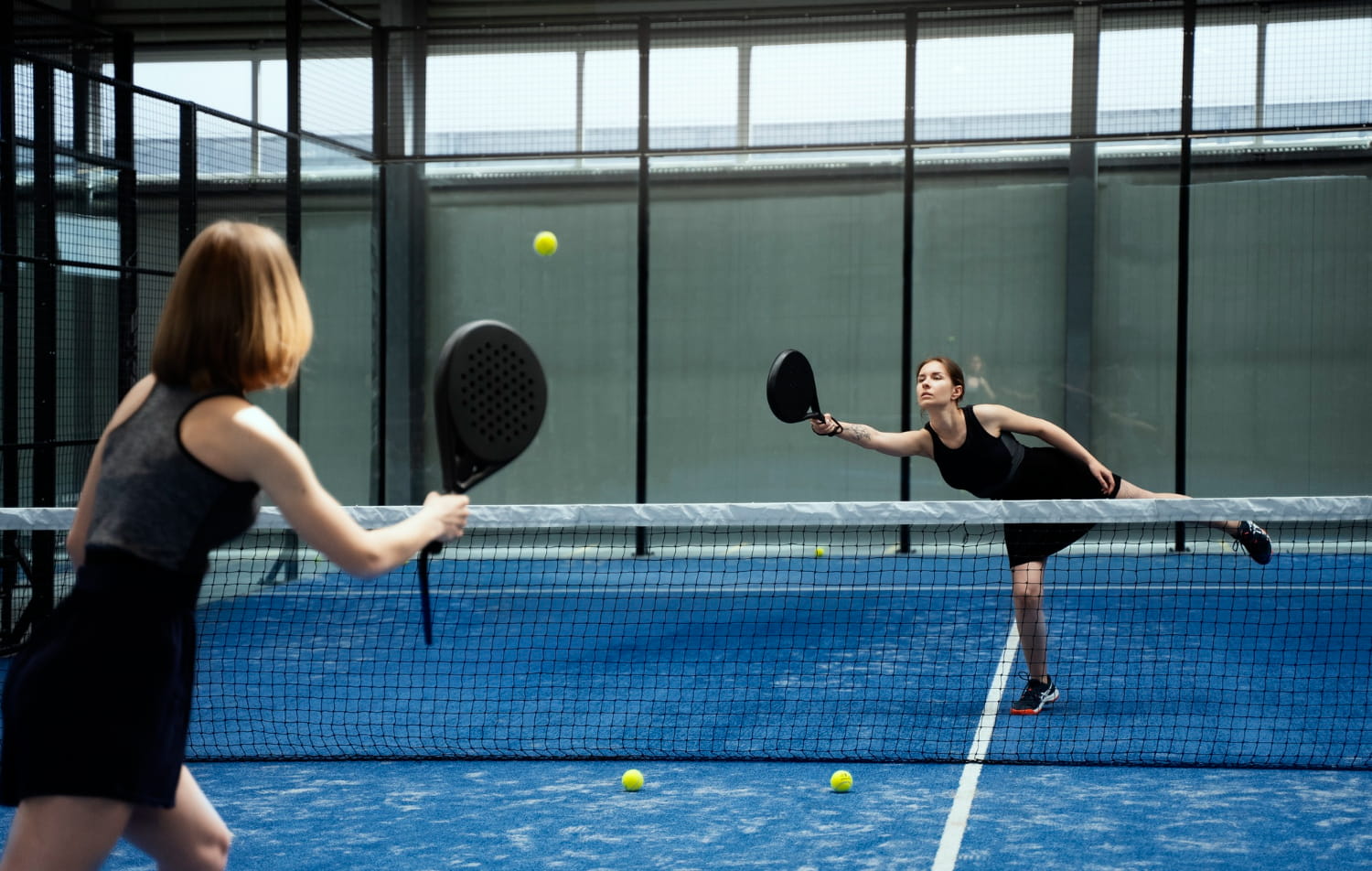
A padel court is significantly smaller at 65.6 feet long and 32.8 feet wide. It’s fully enclosed with glass walls and metal mesh that are used as part of the game. Our courts are built to international federation standards to give you the best possible experience.
A pickleball court is the smallest of all three, measuring just 44 feet long and 20 feet wide. Interestingly, pickleball courts are often drawn onto tennis courts, which gives you an idea of how compact they are.
The smaller the court, the more the game focuses on skill and strategy rather than athleticism which is why padel and pickleball tend to attract players of all fitness levels and ages.
Difference No. 2: What Equipment Do You Need?
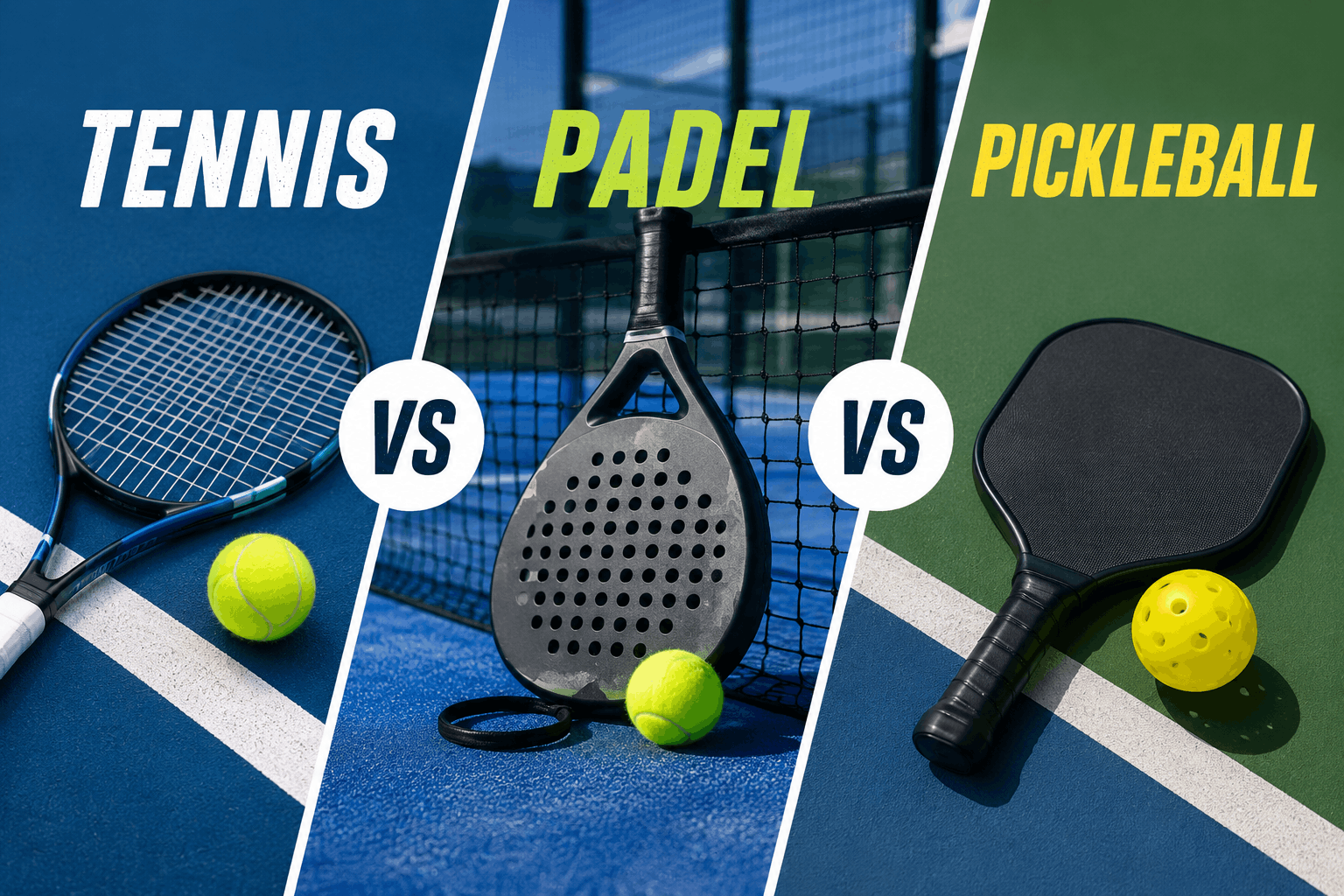
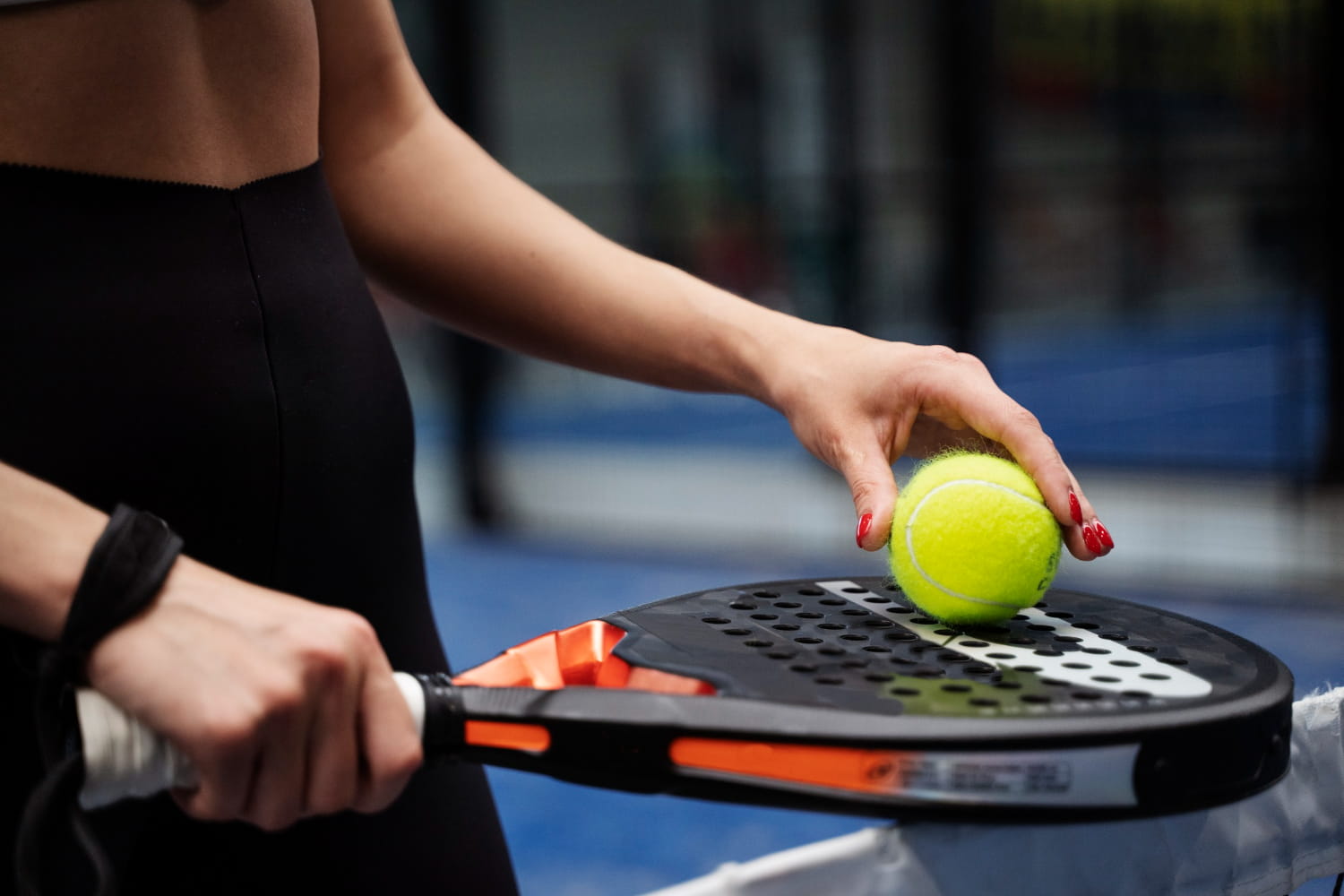
The rackets, paddles and balls used in each sport are actually quite different from one another. With tennis, players use a strung racket, typically made from graphite or a composite material. The strings create a trampoline-like effect that helps propel the felt-covered ball with speed and spin.
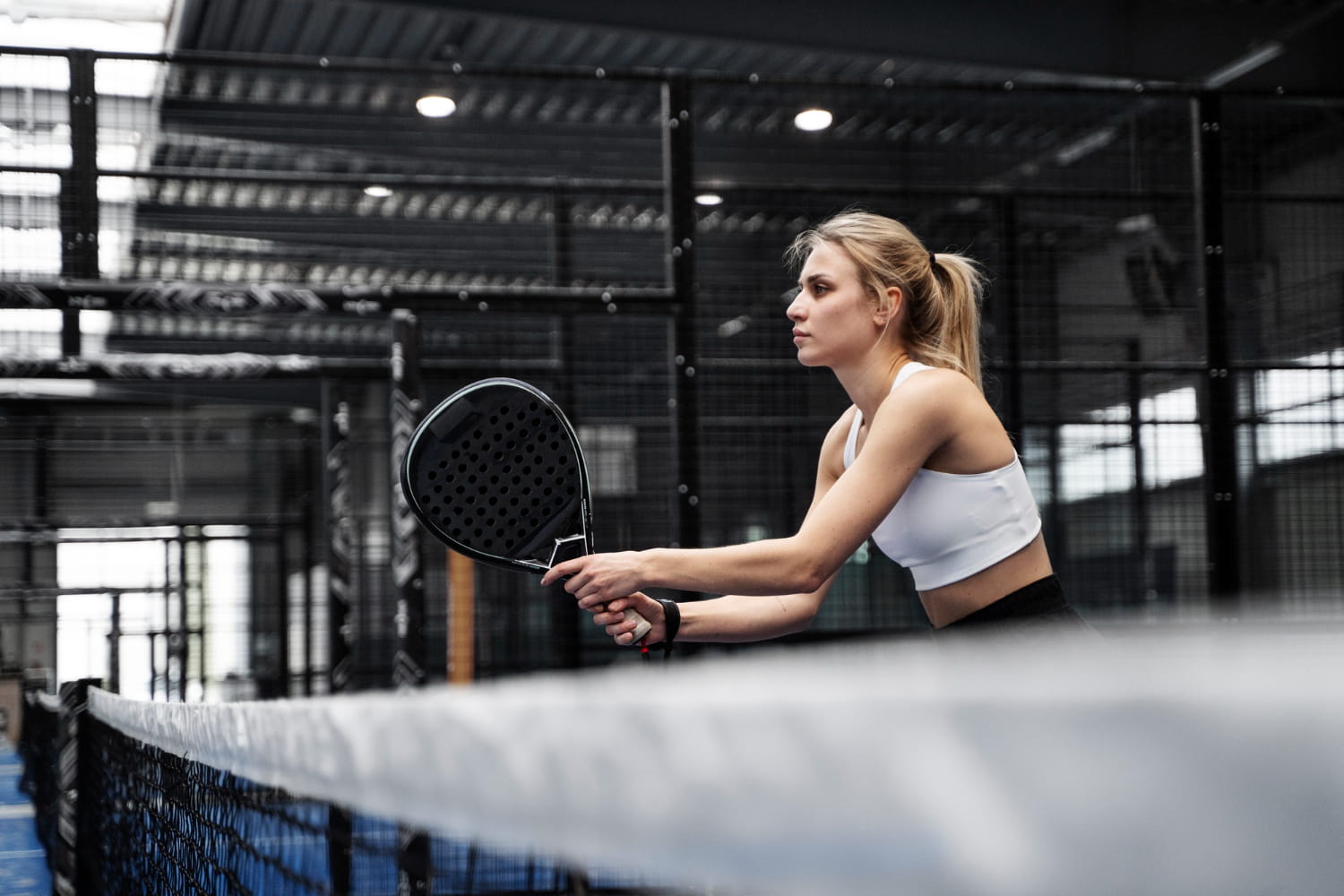
In padel, we use a solid, light-weight racket. It’s shorter, thicker and perforated with small holes. Because of this, touch and control become even more important. The ball is similar to a tennis ball but slightly less pressurized, which affects how it behaves on the court and off the glass walls.
In pickleball, players use a solid paddle often made from wood, composite or graphite and a lightweight, hollow plastic ball with holes punched through. The ball moves more slowly than a tennis ball, making the game great for beginners.
Difference No. 3: Are the Rules Very Different?
When comparing Tennis vs Padel vs Pickleball, the rules do share some DNA but diverge in a few ways. Tennis scoring follows a love-15-30-40-game-set-match structure. Matches are played to the best of three or five sets depending on the tournament or format.
Padel uses the same scoring system as tennis, which makes it easy for tennis players to transition. But the key difference is that in padel, the ball can bounce off the glass walls before being returned making it similar to squash. Serves must be underhanded and the ball must bounce once before hitting the back wall on a serve.
Pickleball has its own scoring system where games are played to 11 points, and you are only able to score when your team is serving. One unique rule is when players are standing in the “kitchen,” (a non-volley zone that extends 7 feet from the net on either side) players cannot volley the ball, which adds an extra tactical layer.
Difference No. 4: Which Sport Is Easier To Learn?
Honestly, all three sports are accessible to beginners, but they differ in how quickly new players feel confident. Pickleball is probably the easiest to learn of the three because it has a smaller court, slower ball and simple scoring which make it easy to get a rally going within your first session.
Padel is also highly beginner-friendly. The enclosed court means the ball stays in play longer, and the underhand serve is much easier to master than a tennis serve. We regularly see first-time padel players having fun within minutes of stepping on court.
Tennis has the steepest learning curve of the three. Mastering the serve alone can take months and the size of the court means players need a level of speed and stamina that the other two sports don’t necessarily require.
Difference No. 5: How Much Does It Cost To Play?
Cost can vary quite a bit across the three sports. Tennis tends to have the highest startup cost including rackets and balls, court fees and lessons. If you’re looking for something more private, club memberships can run into the thousands annually. Pickleball is the most budget-friendly option because paddles are inexpensive and public parks and community centres tend to offer low-cost or even free courts. Padel sits mid-range. Court reservations are pretty affordable especially when split amongst four people. While padel rackets are a good option to purchase if you’re looking to play quite regularly, it’s not required as courts provide rackets for a small fee.
Which Sport Is Right for You?
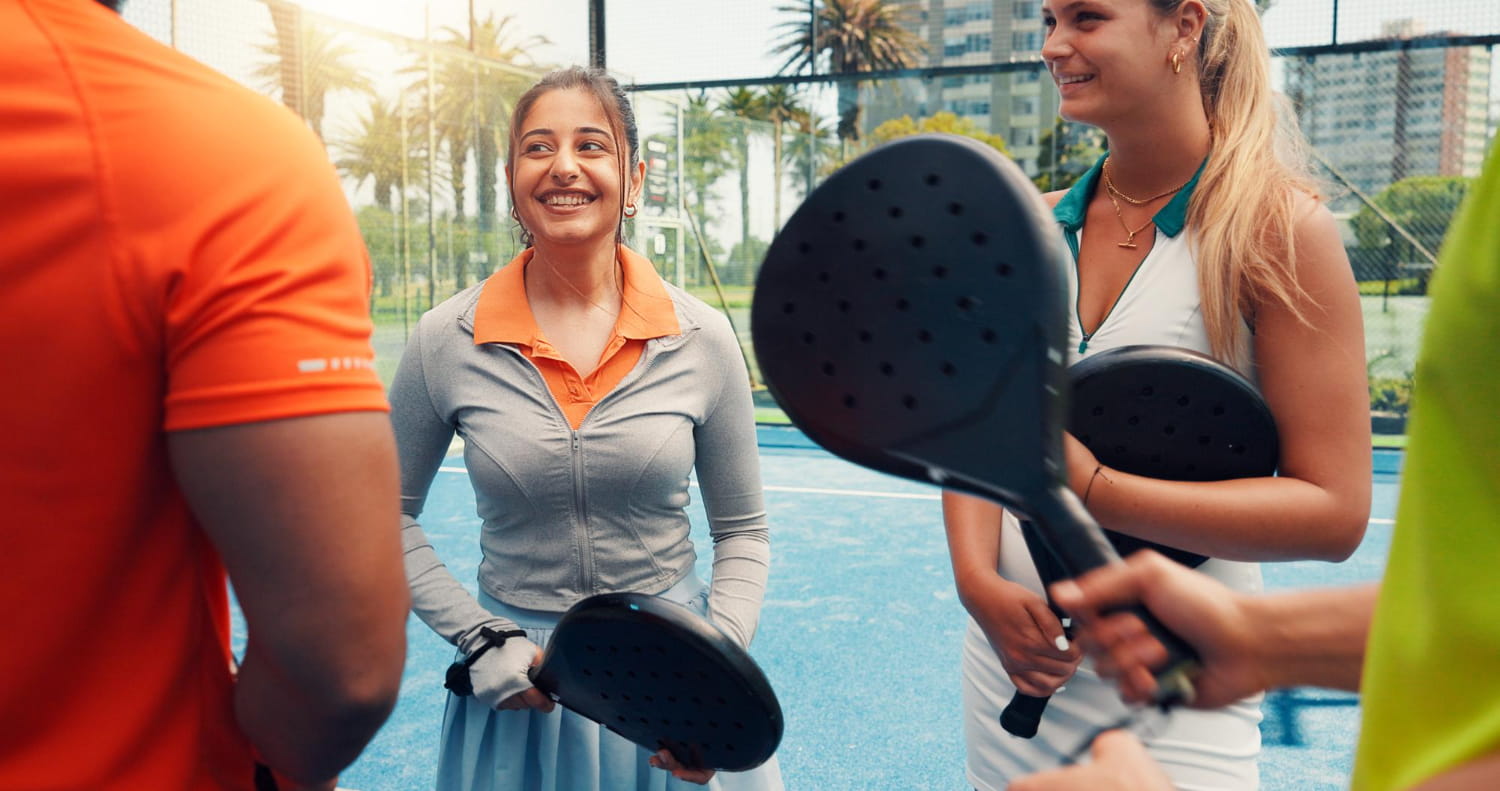
The best way to answer the Tennis vs Padel vs Pickleball question is to try each of them and see what feels like your vibe! If you are looking for a sport that is fast to learn, strategic and built around community, padel is hard to beat.
At La Casa De Padel, we welcome players of all levels, from total beginners to seasoned pros. Whether you are curious about padel for the first time or ready to book a regular court slot, we would love to have you. Book your court with us today and you’ll see why padel is one of the fastest-growing sports in the world.